Frequently Asked Questions
You’ve got questions? We’ve got answers.
About Spectrum Scholars
-
Spectrum Scholars is a specialized private school serving neurodivergent learners ages 5–12. Our Littles classroom generally serves ages 5–8, while our Middles classroom serves ages 9–12.
Age is not the sole determining factor for classroom placement. We consider each student's developmental needs, communication skills, learning priorities, and overall classroom fit when making placement decisions.
-
Our program is designed to support neurodivergent learners with a variety of communication, learning, and adaptive needs. We consider each prospective student individually, taking into account their strengths, support needs, and whether our educational environment can provide an appropriate placement.
-
Spectrum Scholars is a private school, not a traditional ABA therapy clinic. Our educational model is led by Board Certified Behavior Analysts (BCBAs) and incorporates the principles of Applied Behavior Analysis (ABA) throughout everyday instruction.
Rather than providing isolated therapy sessions, we embed individualized teaching opportunities into academic activities, daily routines, recreation, and community experiences.
-
We intentionally maintain small classroom communities to provide individualized attention, meaningful peer interactions, and opportunities for active participation.
Classroom composition and staffing are determined by the needs of enrolled students and the resources required to support a safe, productive learning environment.
A Typical School Day
-
Our school day includes a combination of individualized instruction, small-group activities, classroom responsibilities, recreation, and functional learning experiences.
Students have opportunities to practice communication, independence, and social participation throughout naturally occurring routines.
Because instruction is individualized, daily activities and the level of support provided may differ among learners.
-
Yes! Community-based instruction is an important part of our educational model.
Students regularly have opportunities to practice meaningful skills in authentic settings, including grocery stores, parks, recreational facilities, and other community environments.
These experiences allow students to apply skills such as communication, purchasing, navigation, safety awareness, and participation outside the classroom.
Outing participation is individualized and incorporates appropriate supervision, permissions, and safety considerations.
-
Spectrum Scholars does not provide transportation between students' homes and school. However, we provide transportation for students participating in community-based instruction and outings during the regular school day.
-
Our regular classroom hours are:
Littles (Ages 5–8): 8:45 a.m. – 2:45 p.m.
Middles (Ages 9–12): 8:30 a.m. – 2:30 p.m.
Classroom age ranges are general guidelines. Placement is individualized and considers factors beyond chronological age.Item description
-
es. Functional independence is a central component of our program.
Depending on individual needs and priorities, instruction may address toileting routines, handwashing, dressing, personal hygiene, meal preparation, cleaning, and other activities of daily living.
We collaborate with families to identify meaningful goals and support the development of greater independence across environments.
-
Students entering a single-teacher classroom model must be toilet trained.
We recognize that toileting independence varies across learners and encourage families to discuss their child's current skills and support needs during the admissions process. Classroom placement and the appropriateness of available supports are considered individually.
-
Yes! Spectrum Scholars offers separate summer programming focused on continued functional learning, recreation, independence, and meaningful community experiences.
Summer enrollment and scheduling options may differ from the academic year. Visit our Admissions page or contact our team for current availability.
Admissions, Tuition, & Enrollment
-
We encourage prospective families to begin by scheduling an initial phone consultation.
During this conversation, we'll learn about your child, answer questions about our program, and discuss whether Spectrum Scholars may be an appropriate fit.
Interested families may then complete our Prospective Student Intake Form for individualized review. Additional conversations or an in-person visit may be arranged before an enrollment decision is made.
-
School tours and in-person visits are arranged by appointment to protect instructional routines and maintain a safe learning environment.
We encourage families to begin with an initial phone consultation so we can learn more about their child and determine appropriate next steps.
-
Yes! Spectrum Scholars offers full- and part-time academic-year enrollment options, subject to classroom availability and individualized placement considerations.
Scheduling options can be discussed during the admissions process.
-
Yes! Spectrum Scholars accepts eligible North Carolina Education Student Accounts (ESA+) and Opportunity Scholarship funds.
Scholarship eligibility, application requirements, and award amounts are determined by the North Carolina State Education Assistance Authority (NCSEAA).
Scholarship awards may not cover the full cost of tuition, and families are responsible for any remaining balance.
-
Enrollment availability varies throughout the year.
If an appropriate placement is not currently available, we can discuss potential waitlist opportunities and future enrollment periods.
Completing an inquiry or intake form does not guarantee admission.
Our Educational Approach
-
Our educational priorities extend beyond conventional academic achievement. We emphasize functional communication, independence, self-advocacy, and socially meaningful behavior change.
We use evidence-based assessment and individualized instruction to identify skills that will make the greatest difference in each learner's everyday life.
Our goal is not simply to teach students new skills, but to help them use those skills to access greater independence, choice, and meaningful participation across home, school, and community settings.
-
The Pyramid Approach to Education is an evidence-based educational framework grounded in the principles of behavior analysis.
It emphasizes functional communication, meaningful motivation, effective teaching strategies, and the systematic development of skills that are relevant to everyday life.
At Spectrum Scholars, the Pyramid Approach provides a foundation for creating individualized learning opportunities that are engaging, purposeful, and meaningful to each learner.
-
We combine structured assessments, direct observation, ongoing data collection, and family input to identify individualized learning priorities.
We also consider each student's strengths, interests, preferences, and opportunities for greater independence.
Our goal is to prioritize skills based not only on what a student is ready to learn, but on how those skills can meaningfully improve their daily life.
-
Yes! We incorporate foundational academics and applied academic skills into individualized instruction.
Rather than emphasizing grade-level benchmarks alone, we focus on developing academic skills that are accessible, relevant, and functional for each learner.
This may include literacy, numeracy, problem-solving, calendar skills, money management, and other academic concepts embedded into meaningful everyday activities.
-
No. We recognize and support multiple forms of communication, including spoken language, gestures, picture-based systems such as PECS, and augmentative and alternative communication (AAC).
Our priority is helping every learner develop an effective, functional communication system that allows them to express needs, make choices, share interests, and advocate for themselves.
-
We recognize that behavior serves a function and that effective support begins with understanding the individual learner.
Our team uses proactive, individualized strategies to support emotional regulation, functional communication, flexibility, and the development of meaningful alternative skills.
During the admissions process, we carefully consider each student's behavioral and support needs to determine whether our program can provide an appropriate and safe learning environment.
Family Collaboration & Student Progress
-
Family values and priorities are an essential part of our individualized educational process.
Through ongoing communication, collaborative discussions, and our Values & Functional Independence Assessment, we seek to understand the routines, challenges, experiences, and goals that matter most to each family.
We combine this information with each student's preferences, strengths, and assessment results to develop goals that can make meaningful improvements in everyday functioning.
-
Our team uses individualized assessment, systematic data collection, and ongoing observation to monitor skill development and inform instructional decisions.
We also consider whether students can apply newly acquired skills across people, settings, and situations.
Progress is communicated through ongoing family collaboration, student updates, and opportunities to discuss individualized learning priorities.
-
We emphasize generalization, or the ability to use learned skills across different environments, people, and situations.
By teaching through meaningful routines, real-world experiences, and community participation, we create opportunities for students to practice skills in the contexts where they are naturally needed.
We also collaborate with families to identify ways to support meaningful skill development at home.
-
Yes! We recognize the importance of collaboration across educational and therapeutic settings. Students may receive services such as speech therapy, occupational therapy (OT), physical therapy (PT), and feeding therapy on-site when appropriate agreements are in place.
These arrangements are considered individually based on each learner's needs, with consideration for scheduling, coordination, and the student's educational program.
-
Spectrum Scholars does not currently accommodate dedicated 1:1 support personnel or outside ABA providers within our classrooms.
Our educational model emphasizes individualized instruction within a small-group learning environment. We recognize that students have varying support needs and welcome opportunities to discuss available supports and appropriate accommodations during the admissions process.
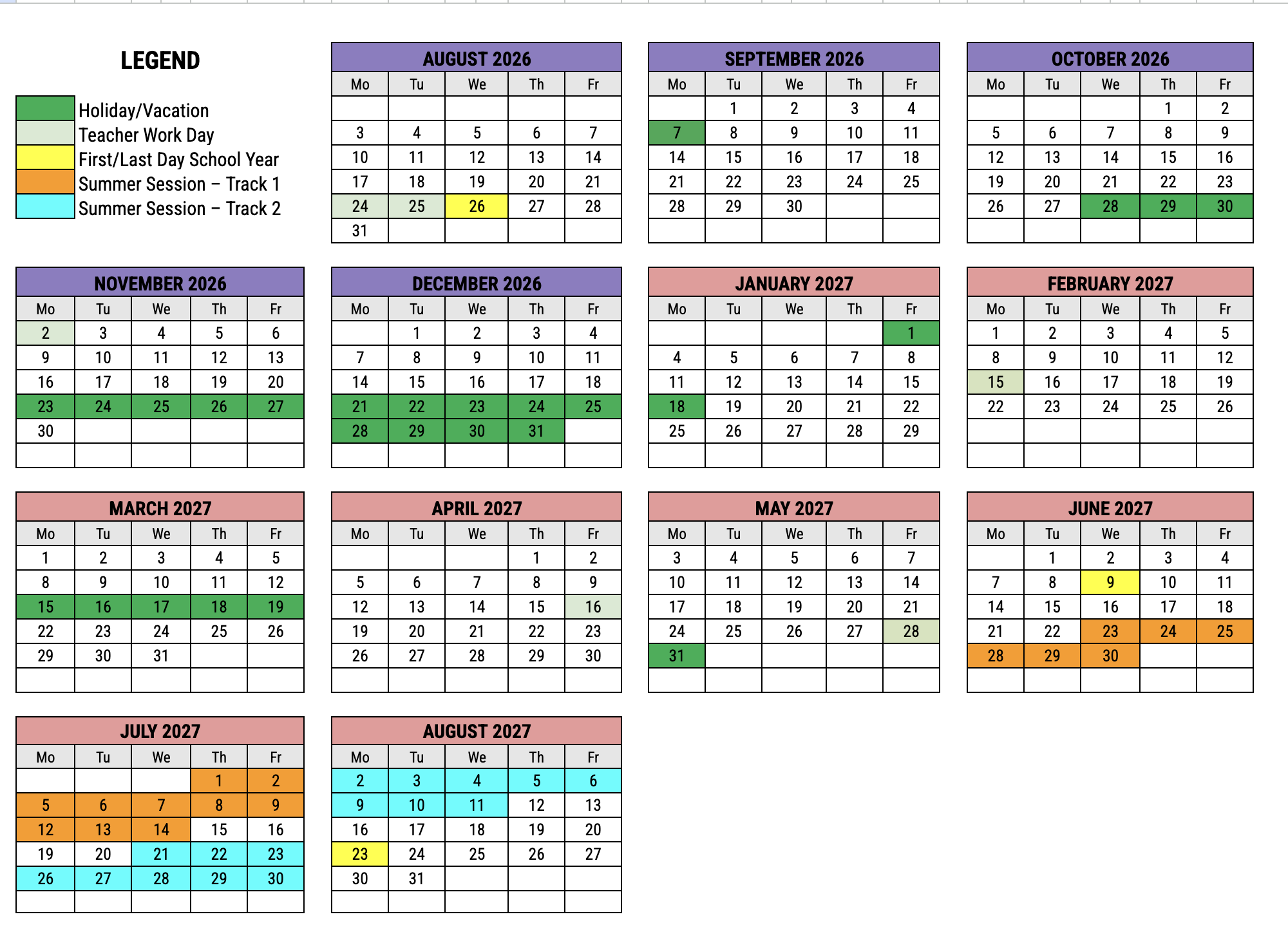
2026-2027 Academic Calendar